ভূত-জাল কী?
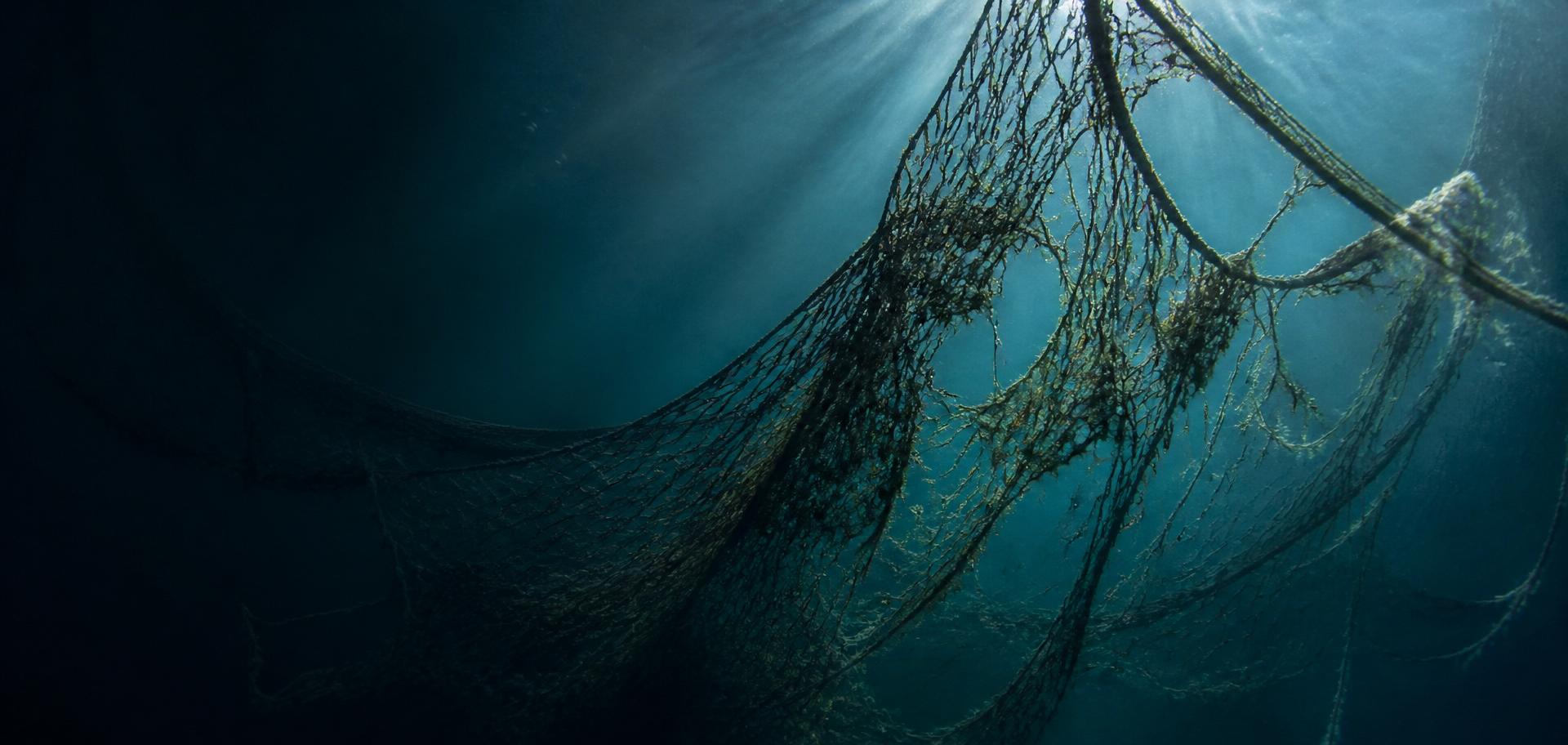
ভূত-জাল হল হারানো বা ফেলে দেওয়া যেকোনো মাছ ধরার সরঞ্জাম। টেকসই প্লাস্টিকের তৈরি বলে এটি দশকের পর দশক মাছ, কচ্ছপ, ডলফিন ও সামুদ্রিক পাখি ধরতে ও হত্যা করতে পারে।
The ocean's invisible plastic problem — what ghost gear is, why it persists, and how the report-to-cleanup loop breaks it.
ভূত-জাল হল হারানো বা ফেলে দেওয়া যেকোনো মাছ ধরার সরঞ্জাম। টেকসই প্লাস্টিকের তৈরি বলে এটি দশকের পর দশক মাছ, কচ্ছপ, ডলফিন ও সামুদ্রিক পাখি ধরতে ও হত্যা করতে পারে।
এটি দৃষ্টির বাইরে ডুবে যায়, তাই তেল ছড়িয়ে পড়ার মতো খবরে আসে না। কোনো বৈশ্বিক নিবন্ধন নেই, ৩০ মিটার নিচে জড়ানো জাল দেখার মতো কোনো স্যাটেলাইট নেই। উপকূলীয় সম্প্রদায় প্রথমে দেখে — এখন তারা রেকর্ড করতে পারে।
All figures are widely cited global estimates from FAO, UNEP, and WWF. Not Bangladesh-specific unless sourced.
One image worth a thousand words. Follow a lost net from a stormy night at sea to the moment it is finally pulled out — and why that loop has to be broken.
A net snags, a storm takes a trap — it sinks.
Fish, turtles and dolphins are trapped for years.
A fisherman or coastal resident sees it and pins it.
Pins cluster into hotspots on the live dashboard.
NGOs and fisheries teams retrieve the gear.
Fewer entanglements, less ocean plastic.
Live from the ghost-gear map — 0 total reports, 0 resolved. Counters update automatically as reports are marked resolved.