
Sea Turtles of the Bay of Bengal — A Field Guide
A plain-language guide to the Olive Ridley, Green, and Hawksbill sea turtles of the Bay of Bengal — diet, life cycle, breath-holding, and how ghost fishing gear threatens them.
Why the Bay of Bengal matters
The Bay of Bengal is one of the world's most productive tropical seas — warm, shallow, and fed by the Ganges–Brahmaputra–Meghna delta. Three of the seven living sea turtle species use its beaches and feeding grounds. All three are threatened, and all three are killed by the same invisible problem: lost and abandoned fishing gear.
The three species you'll see
Olive Ridley
Lepidochelys olivaceaVulnerable (IUCN)The most commonly seen turtle along Bangladesh's coast. Olive Ridleys nest in large numbers on the beaches of St. Martin's Island, Sonadia and Cox's Bazar between October and March. They are small (40–50 kg) and feed mainly on jellyfish, crustaceans and small fish.
Green Turtle
Chelonia mydasEndangered (IUCN)Named for the greenish fat under their shell. Adults are largely herbivorous — they graze on seagrass and algae in the shallow waters off the Bay of Bengal. Loss of seagrass meadows and entanglement in drifting nets are the two biggest local threats.
Hawksbill
Eretmochelys imbricataCritically Endangered (IUCN)A reef specialist with a narrow, pointed beak it uses to pull sponges off coral. Hawksbills are rare visitors to the Bangladesh coast and have been historically hunted for their patterned shell. Even a single ghost net snag on a reef can kill several at once.
Sea turtle facts at a glance
How ghost gear kills sea turtles
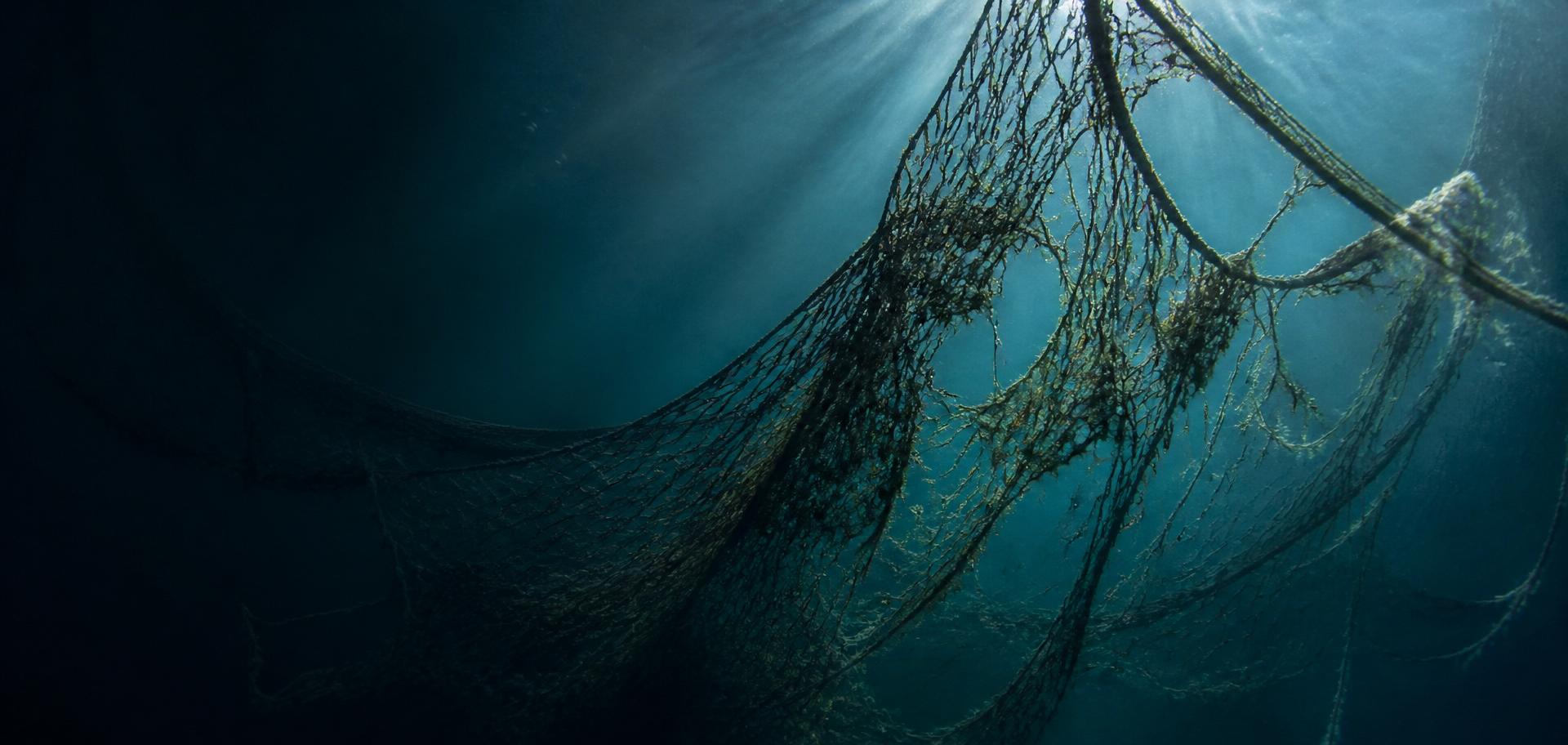
A drifting gillnet is invisible in the water column. A turtle surfacing for air swims straight into it, tangles a flipper, and cannot reach the surface. Because a healthy turtle can hold its breath for hours, fishers and divers often find them already drowned — the net keeps killing for years.
Olive Ridleys nesting on St. Martin's and Sonadia are especially exposed: females cross dense near-shore fishing zones to reach the beach. Green turtles grazing on seagrass meadows get tangled in abandoned set nets. Hawksbills on the few remaining reefs lose entire foraging patches when a single net snags the coral.
See a ghost net? Pin it in 30 seconds.
Every report becomes a hotspot on the live map and helps cleanup teams reach the gear before another turtle does. No account required.